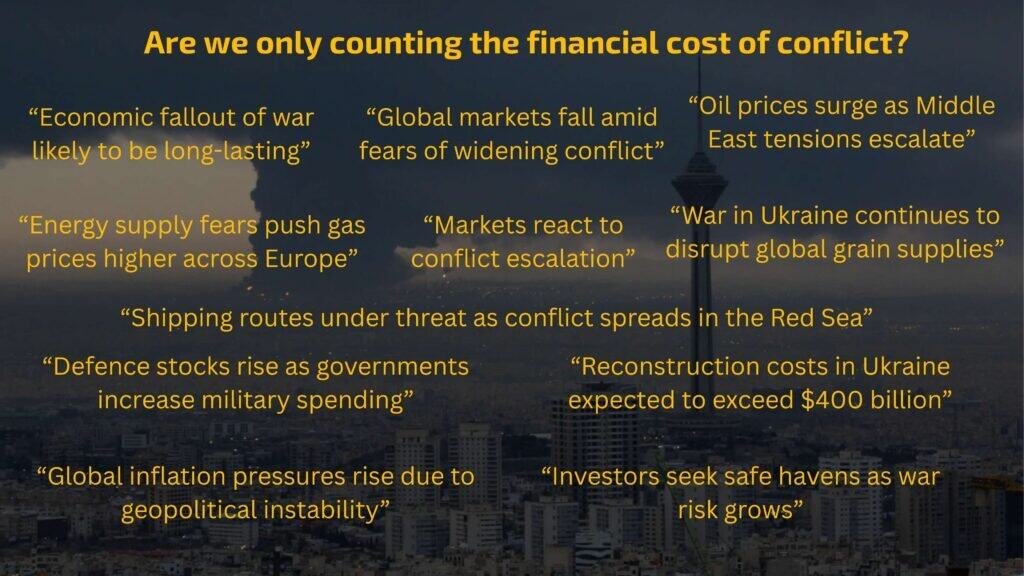
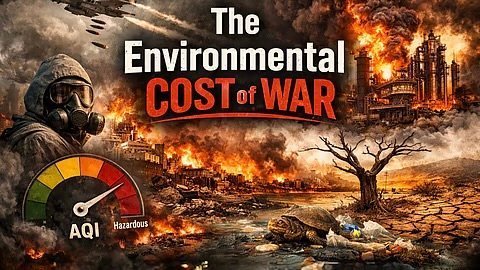
We track markets, oil prices and GDP by the minute – but don’t seem to count the environmental devastation of war at all.
Have you ever stopped to think about the carbon impact of bombing? That alone is gargantuan. But when you factor in the rebuilding of everything that has been destroyed, it becomes almost inconceivable.
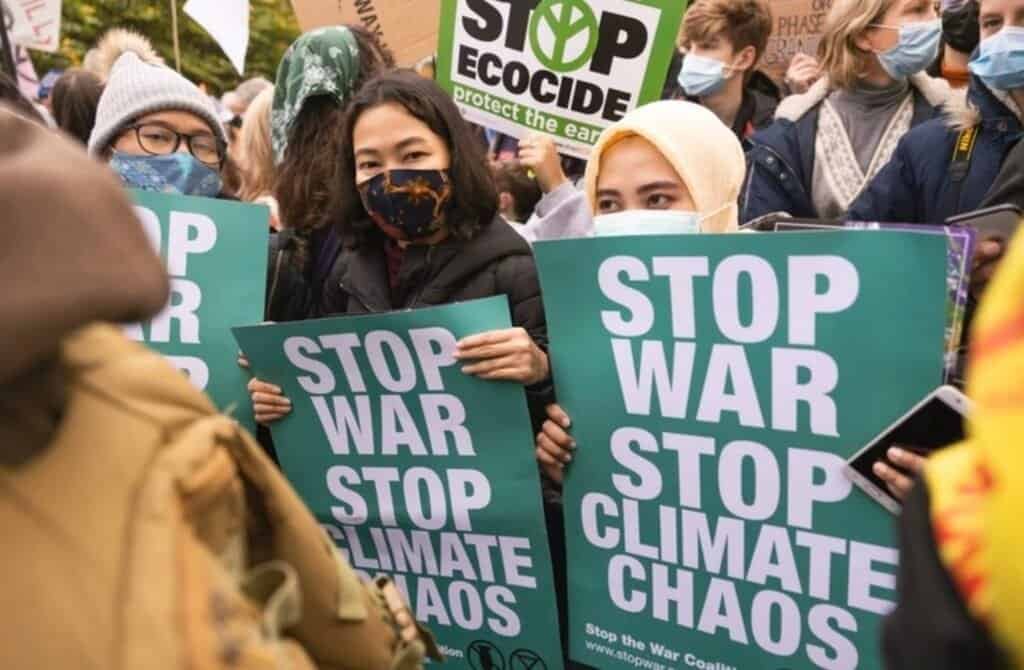
War is not just a humanitarian catastrophe – it is a climate catastrophe too.
And yet you rarely hear this discussed. Not in the news, not in podcasts, not in everyday conversation.Instead the focus is overwhelmingly on the economic consequence of conflict, as if somehow this trumps everything else.(No pun intended – though it is rather apt.)
The scale of destruction - and the sense of futility
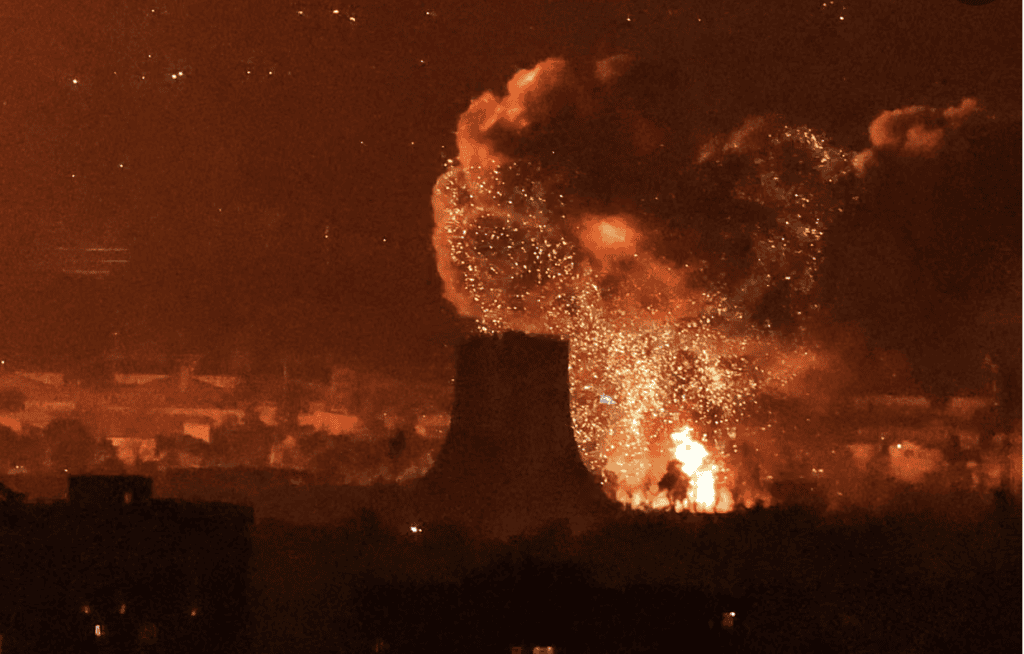
Does it make you wince when you hear about the destruction of energy plants, oil infrastructure, tankers – and of course, entire cities?
I despair at the human cost. But I also despair at the sheer waste.
Why have I spent my life trying to save energy, eliminate waste and promote renewables, when in a single minute of destruction it can all be undone? What difference can I make? What can we collectively do when the world has gone mad?
A view from space - what we’ve forgotten
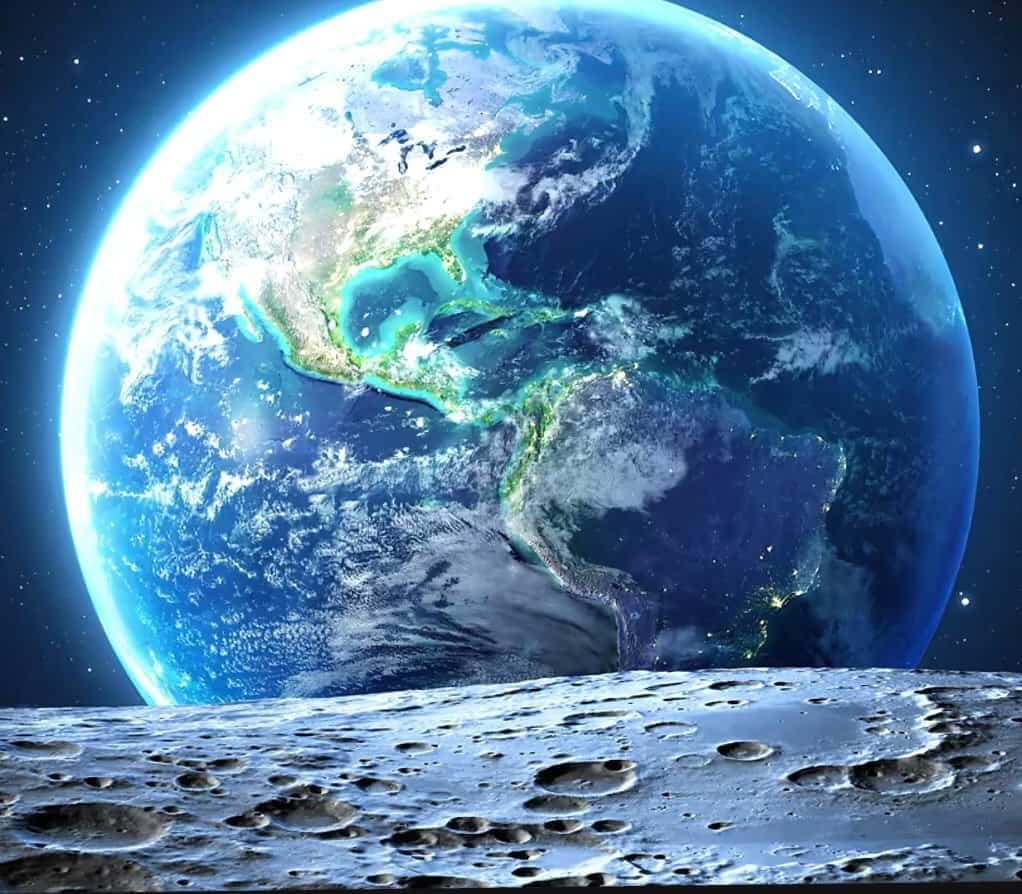
This makes me think of astronauts.
Looking back at Earth from space, William Anders said:
“We came all this way to explore the Moon, and the most important thing is that we discovered the Earth.”
And Ron Garan reflected:
“From space, I saw that the world is a tiny, fragile ball… and we’re all in this together.”
It doesn’t feel like that today.
Have we collectively forgotten that the most important thing for human life is to protect the natural world – not blow it to smithereens?
The hidden carbon cost of war
It is widely estimated by the Conflict and Environment Observatory that the world’s militaries are responsible for around 5.5% of global greenhouse gas emissions. That may well be a conservative figure given the scale of recent conflicts.
Let’s look at what we do know.
In February 2025, it was estimated that Russia’s full-scale invasion of Ukraine had already caused around 230 million tonnes of CO₂e in its first three years. Only about a third of this came from direct warfare. The majority comes from the aftermath – rebuilding cities, repairing infrastructure, and rerouting systems like aviation.
The numbers relating to Iran and the wider regional conflict are still emerging. As of April 2026, more than 12 million barrels of oil had already been lost, with further escalation expected.
Beyond carbon - the environmental toll of war
But it’s not just carbon. War unleashes a cascade of environmental damage: air toxics, soil and water contamination, marine pollution, black carbon, methane leaks, refinery fires, and vast soot emissions. It also locks countries more deeply into emergency fossil fuel use.
When oil and gas infrastructure becomes a battlefield, the result is not just an energy shock – it is a climate shock, a pollution shock and a water security shock all at once.
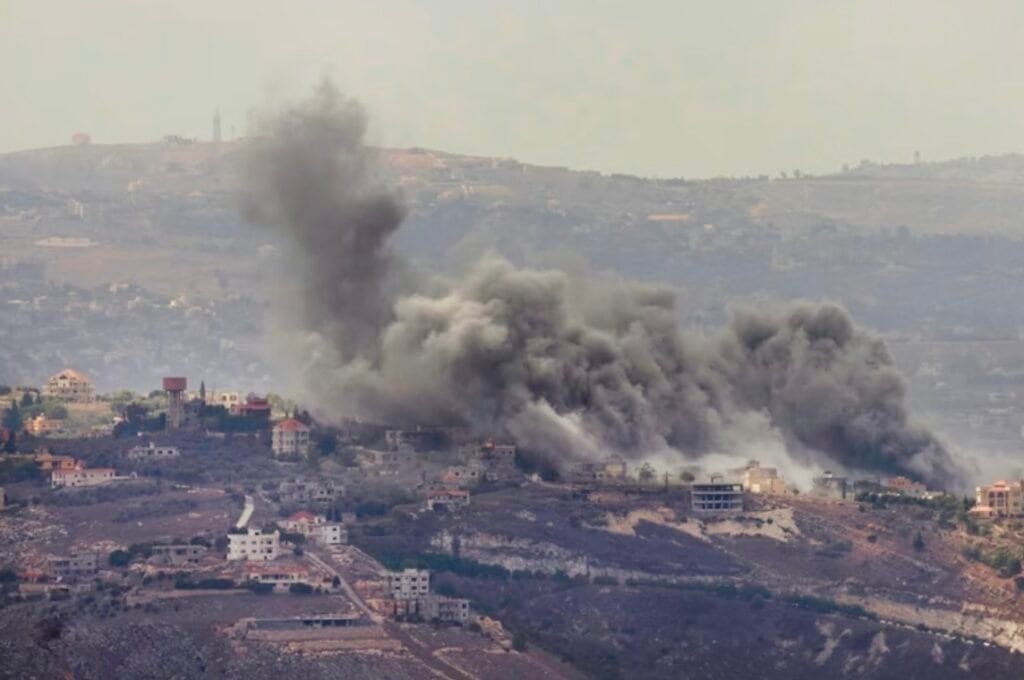
Ironically, climate change itself is now amplifying war damage. Hotter, drier conditions allow conflict-related fires to spread faster and further. In 2024, in southern Lebanon, more than 10,800 hectares burned – over ten times the annual average.
Orchards burnt in the Lebanon by bombing from Israel
And then there is displacement. People forced to flee conflict, drought and famine create further environmental pressure. Water scarcity is intensifying. The idea of attacks on desalination plants in already water-stressed regions is almost too bleak to contemplate.
What we measure - and what we ignore
The bottom line is this:
We meticulously track fuel prices, markets and economic growth. But we barely measure – let alone report – the environmental cost of war.
Emissions, toxic debris, destroyed ecosystems and the carbon cost of rebuilding remain largely invisible.
Yet the evidence from Ukraine, Gaza, Lebanon and the wider Middle East all points in the same direction: the climate cost of war is vast, and systematically underestimated.
Why isn’t this being reported?
So what needs to change?
In my view, it starts with the media.
Please tell us about the environmental cost of war – not just the financial one. People cannot care about what they do not see.
One idea I’ve had for some time is this: replace the financial summary at the end of the news with an environmental one.
How much carbon has been released today?
What pollution has been caused?
What ecosystems have been damaged?
And importantly – what progress has been made?
If we knew, would we care more?
If we knew, more people might care. And if more people cared, perhaps – just perhaps – those driving these conflicts might be forced to think again.
Because at the moment, it feels like we are counting everything… except what really matters.
I’m not at all religious, but if I thought it would make a difference, I’d pray.