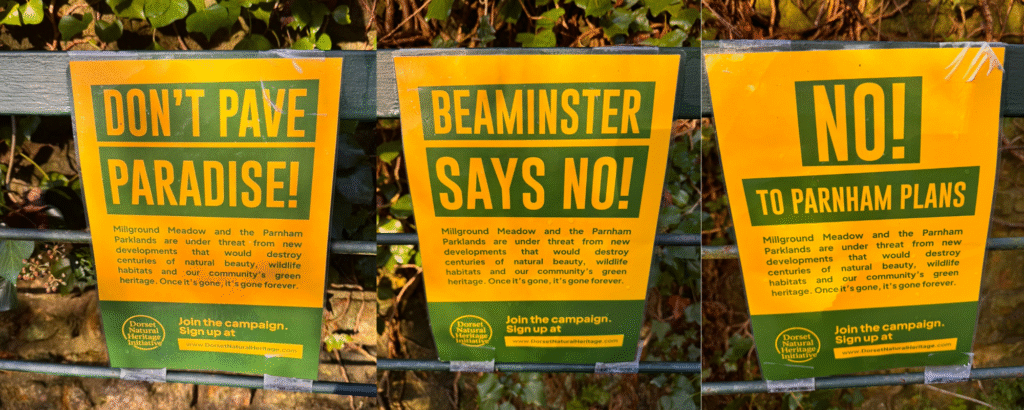
There was shouting. There were walkouts. There were calls for councillors to resign. Placards were waved reading “Represent Us – Reject Parnham.”
Feelings were running high at Beaminster’s extraordinary planning meeting on Parnham – and understandably so. But this was not an angry mob lacking substance. The people who spoke were measured, articulate and deeply informed. Many had applied their professional skills to scrutinise the Parnham planning application in detail. What emerged was not hysteria, but a powerful, evidence-based challenge to a proposal that feels profoundly wrong for Beaminster.
Some background
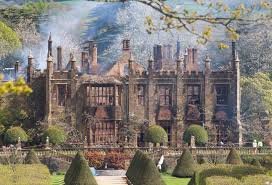
Parnham House before the fire
The fire - caused by arson - ravaged the building....
Parnham House is a magnificent Grade I-listed Elizabethan mansion, severely damaged by fire in 2017. Its new owner, James Perkins, has applied for permission to build a large executive housing estate across the historic deer park and meadow by the River Brit, claiming this is “enabling development” – the only way to fund restoration of the house. This framing lies at the heart of the controversy.
The key objections raised
Enabling development – unjustified and deeply questionable: The entire scheme rests on the principle of enabling development, but serious doubts were expressed that the strict tests for this type of development are met. Speakers questioned whether the scale proposed is genuinely the minimum necessary, whether alternatives have been properly explored, and whether the claimed public benefit is clear and convincing. It was also noted that similar arguments have been made by the same owner elsewhere and have been refused.
Is the pain worth the gain? There was widespread scepticism that the level of harm proposed – to landscape, wildlife and community – is proportionate to what is promised in return. Even the restoration plans themselves were questioned. If saving the house requires such extensive damage to its setting, is the proposal fundamentally flawed?
Current bridge to Millground Meadow - the plan is for a new road bridge further south from this.
Flimsy and incomplete financial information: Repeated concerns were raised about the credibility and transparency of the financial case. The absence of a cashflow, unexplained assumptions and missing cost items all undermine confidence that the development would actually deliver the restoration it claims to enable. Several speakers asked the obvious question: if the finances are this finely balanced, is the scheme viable at all?
Community and public benefit – or rather, the lack of it: This remains my biggest concern. The proposals appear to take away from Beaminster rather than give anything back. Most starkly, the development would remove one of the town’s most valued rural walks – along the River Brit towards Netherbury – replacing open meadow with housing. This is not an abstract planning issue – it is the loss of a much-loved landscape that many people walk regularly, and which forms part of Beaminster’s wider setting.
What will Beaminster get in return for losing their much treasured rural walk if a housing estate is built here?
Wildlife – mitigation, not recovery: The plans acknowledge significant ecological impacts but do little to address the wider ecological decline already affecting the Brit Valley. This is not a scheme rooted in conservation or recovery – instead it is focused on managing the damage it causes rather than reversing it. A family living close by are worried about the fate of the otters they have seen playing on the river banks.
An incoherent, car-dependent plan: There is no clear or safe walking route from Parnham to Beaminster town centre. No pavement. No obvious alternative. The distance is significant for walking. Either residents of the new development would be placed at risk, the already constrained road would need further alteration, or – most likely – people would simply drive. In the context of climate commitments, among other things, this feels entirely back-to-front and indicative of a scheme that has not been properly thought through as an integrated whole.
From open parkland to cramped estate: The density of the housing raised alarm. Terraces within terraces. Limited outlooks. Questionable space for parking, let alone food growing. A shift from open historic parkland to a tightly packed, gated enclave – physically and socially detached from the town.
Looking up Parnham drive - most of the proposed houses will be to the right of this in the deer park
Community Infrastructure Levy – a worrying implication: I heard that paying the Community Infrastructure Levy – around £2.7m – which would normally support schools, health services and other local infrastructure – could make the scheme unviable, even jeopardising essential works such as repairing the roof. If that perception is correct, it raises serious questions. If meeting basic community obligations threatens the whole project, what does that say about the robustness of the proposal?
Access – unclear and unconvincing: As far as I can tell, there is no clear commitment to meaningful public access to the house or grounds – for Beaminster residents or even necessarily for those living on the estate. The existing bridleway is to be moved, but where to, and with what effect on access – this remains unclear. Overall, the proposals lack any sense of cohesion or generosity towards the wider community.
A deeper concern: holding the community to ransom
What became increasingly apparent is this: when Parnham was purchased, the owner must have known that restoring a fire-damaged Grade I-listed building would be a major and costly obligation. The impression left last night is that the purchase price only made sense on the assumption that large-scale development in the setting would be permitted.
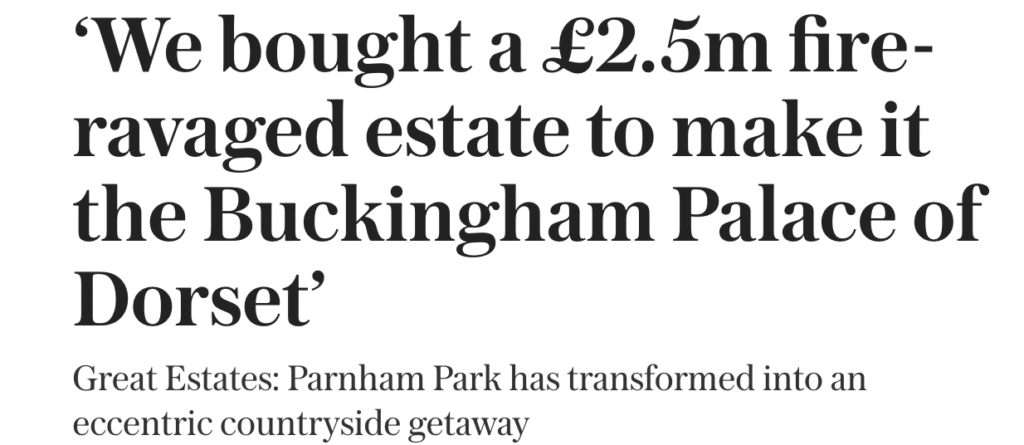
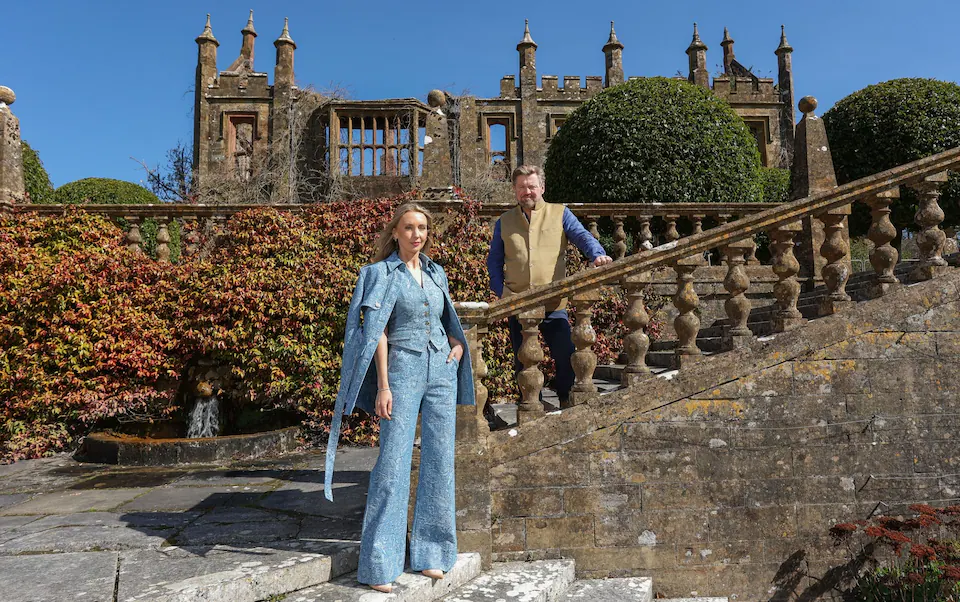
James and Sophie Perkins in article from the Daily Telegraph - April 2025
That raises a fundamental question. If the only way an owner can afford to meet their obligations is by destroying the very landscape that gives the heritage asset its significance, does that not undermine the application itself?
It felt, at times, as though the community is being presented with an implicit ultimatum: approve this development, or the house remains a ruin. That logic runs counter to the principles underpinning heritage protection and raises uncomfortable questions about due diligence and risk-taking at the point of sale.
But imagine a different starting point
Last night was not only about opposition. It was also about possibility.
If some development genuinely has to happen, why not begin with a vision rooted in community, ecology and place?
Imagine Parnham as:
A park for Beaminster, not a private enclave
Circular walking routes reconnecting people with the whole estate
Education projects bringing children to learn about history, landscape and ecology
Active support for nature recovery, working with the Brit Valley Project
A venue for community events in the main house
Partnerships with organisations such as the Prout Bridge Project, Bridport Food Matters and others
In short, a place that genuinely gives back – emerging from the ashes as a shared civic asset, not an exclusive development.
A line has been drawn
Last night felt like a turning point. Not because everyone agreed, but because the community made clear it will not quietly accept a scheme that is all pain and no gain.
This isn’t anti-heritage. It’s pro-place.
It isn’t nimbyism. It’s stewardship.
And it isn’t about blocking progress – it’s about demanding something better.
The public consultation closes on 11 January, and the application is expected to go before Dorset Council’s planning committee in February, with the exact date yet to be confirmed. If you care about this place, now is the moment to engage – and to be heard.
This is where most of the 80 plus houses are planned - in the deer park
What will happen to the deer?
The wooden bridge to Millground Meadow where part of the development is planned - and my dog Ziggy, inspecting the sign to Parnham Park which says he must go on a lead.
NOTE: If anyone sees anything I’ve written that is inaccurate, please let me know on julia@juliahailes.com