
Those promoting the Parnham proposals often frame the issue very simply: do you want to save this historic house in West Dorset, near Beaminster – or leave it as a ruin?
It is a compelling question, but a misleading one.
Most people would like to see Parnham House restored. Few would argue otherwise. But restoration is not a binary choice between rescue and neglect. The real questions are who pays, who benefits, and what is lost along the way.
Local concern is growing because it appears that the costs will fall largely on the community – through loss of amenity, damage to a historic landscape, and significant impacts on local services and infrastructure – while the public benefits are hard to identify. The completed development would remain in private ownership, with limited and conditional public access, raising doubts about whether what is gained is proportionate to what is given up.
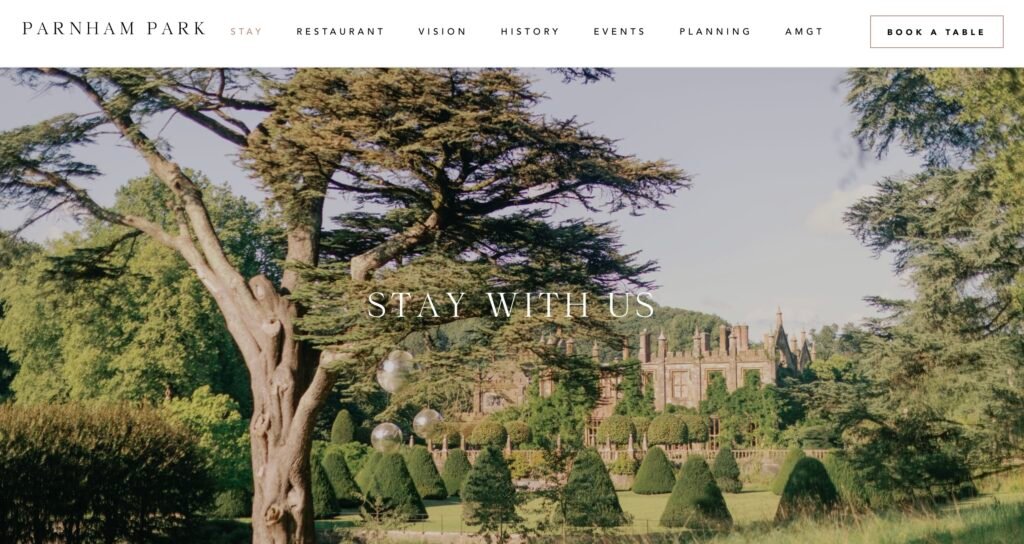
Parnham House is one of Dorset’s most important historic buildings and was badly damaged by a fire caused by arson in 2017. Like many people locally, I care about its future and would like to see it restored. I have no objection in principle to restoring the house, or to the approach of retaining the historic façade while adapting the interior for modern use.
My concerns lie with what is being proposed around it – and with where the wider costs fall.
Enabling development – and the public interest
The proposals are presented as an enabling development: housing intended to fund restoration of a heritage asset that would otherwise be uneconomic.
Planning policy allows this only where strict tests are met. In short, such development should be essential, the minimum necessary, and clearly in the public interest – including evidence that genuine alternatives have been explored and that public benefits decisively outweigh harm.
It is against these tests, taken together, that the Parnham proposals need to be judged.

Scale, location and impact
Around 82 executive homes are proposed, not just beside the house but within its historic deer park and surrounding meadowland.
Public access to the deer park itself is currently limited to the bridleway, but the surrounding meadow – including the route from Beaminster towards Netherbury – is public land that is widely used for walking and recreation. This wider setting contributes significantly to Parnham’s historic character, and its loss matters.
A development of this scale brings permanent and cumulative impacts: increased traffic and parking pressure, additional demand on local services, sewage impacts, loss of valued open land, and ecological harm within a sensitive historic landscape.

Who bears the cost – and who benefits?
Ordinarily, development of this size would be expected to mitigate and contribute towards its impacts. In this case, the argument appears to be that such obligations should be reduced because the scheme is enabling heritage restoration.
That raises a fundamental question: should the public absorb the impacts of a large private housing development in order to fund the restoration of a privately owned asset?
Much is said about public benefit, but the house will remain private, access limited, ecological enhancement unclear, and long-term commitments uncertain. By contrast, the impacts on Beaminster and its surroundings are clear and enduring.
Heritage need or commercial viability?
The key issue is whether the scale of development is driven by what the house needs, or by what the wider commercial enterprise requires to be viable.
Commercial viability matters, but it’s not on its own a justification for planning permission. Enabling development should be led by heritage necessity, not by maximising development value.
Where this leaves me
To be clear, I do not object to private enterprise, nor do I oppose the restoration of Parnham House. I understand the challenge and respect the desire to save an important building.
But I do object to a situation where the impacts, risks and costs are public, while the benefits are primarily private.
That is not, in my view, what enabling development is meant to be.
Further details
I have set out my current thinking in more detail in an accompanying paper, which includes relevant policy context and notes from meetings with the project team. See end of this post.
These are my views as things stand and may evolve as further information becomes available. I welcome corrections of fact and clarification where I have misunderstood or misrepresented anything.
However, I do not wish to act as a conduit for ongoing debate. Those who would like to engage further are encouraged to do so through the formal planning process, public discussion, or by contacting organisations involved in coordinating responses, such as Dorset Natural Heritage (action@dorsetnaturalheritage.com).
If you would like to seek the project team’s views directly, the Parnham Park development manager is Ed Grant (ed@parnhampark.co.uk). I can also be contacted at julia@juliahailes.com.
More details about my thoughts: 2026-01-19 pdf Revised JH Thoughts re Parnham